- Home
- About Us
- Our Work
- Livelihoods
- Knowledge Hub
- Gallery
- Internship Program
- Contact
Education & Child Welfare
Supported by Children's Hope India (CHI)
When Pakistani Hindu migrant families arrive in Rajasthan, their children often face profound educational disruption. Language barriers, missing documentation, and the trauma of displacement make entering the Indian school system an overwhelming hurdle — many children begin years behind their peers, some speaking only Urdu, unable to read or write in Hindi or English.
In partnership with Children’s Hope India (CHI), SLS UJAS runs the Asha Kendra in the Anganwa Settlement of Jodhpur — a bridge between displacement and mainstream schooling. The centre offers Early Childhood Education (ECE) for Nursery, LKG and UKG, plus academic support through Grade 8, taught by four dedicated teachers (three for ECE, one for Grades I–V).
Alongside the classroom, the centre runs a remedial program for 46 students across Grades 1–8, totalling 20 hours a week for children who need extra support catching up. The day also includes psychological counselling, career counselling, art & craft, meditation, yoga, and sports — recorded at roughly 29, 24, 59, 38, 10, and 77 hours respectively in a recent quarter — alongside a mental health camp for the wider community.
Names have been changed to protect the identities of the children.
A quiet start, a public breakthrough. One boy came to sessions extremely withdrawn, rarely speaking or making eye contact. Over weeks of creative exercises — colour-based mood check-ins, cooperative games, guided group play — he began participating in small ways. A breakthrough came during an emotion-based role-play activity, where he confidently acted out “happiness” in front of the group. He now regularly joins in, laughs freely, and encourages quieter children to do the same.
Finding her voice. A shy student in UKG once struggled with both English and Hindi — reading, writing, and understanding basic sentences. With regular practice and one-on-one attention, she now reads short sentences, writes neatly, and speaks with confidence in both languages.
Two months in a new country. An eight-year-old who arrived from Pakistan with his family joined the centre knowing only Urdu, calm and withdrawn. Within two months he was recognising Hindi and English letters, reading three- and four-letter words, and learning two-digit addition — the first steps of an education that had been interrupted by border and displacement.
Teachers at the centre have repeatedly requested basic technology support — a projector, a screen, reliable WiFi — to bring videos, stories, and interactive content into lessons that are otherwise taught with a chalkboard and whatever paper and colour pencils are on hand.
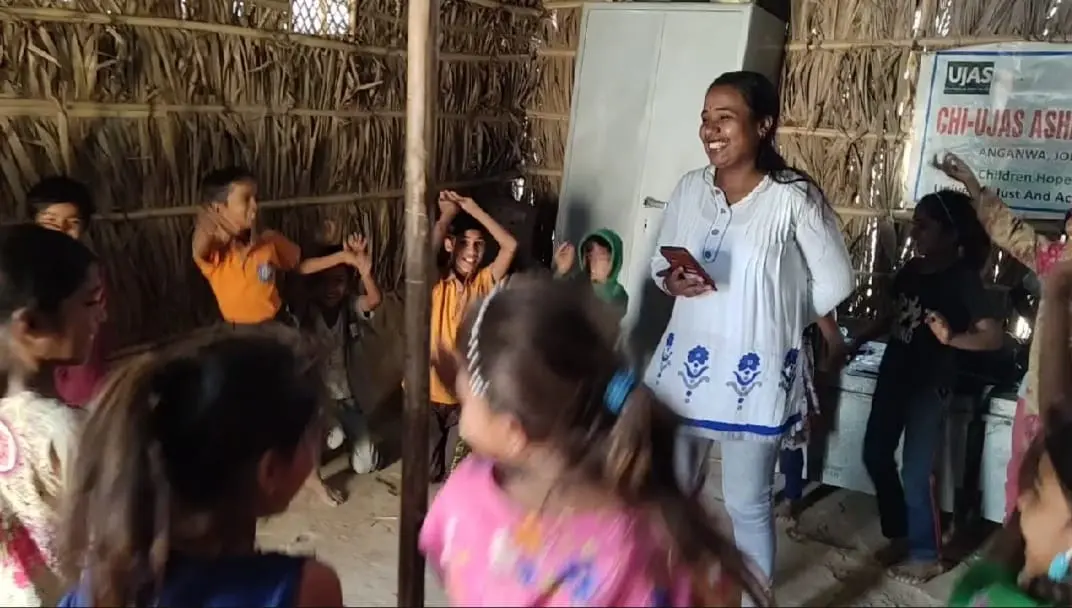
Morning action-song circle at the CHI-UJAS Asha Kendra, Anganwa, Jodhpur.
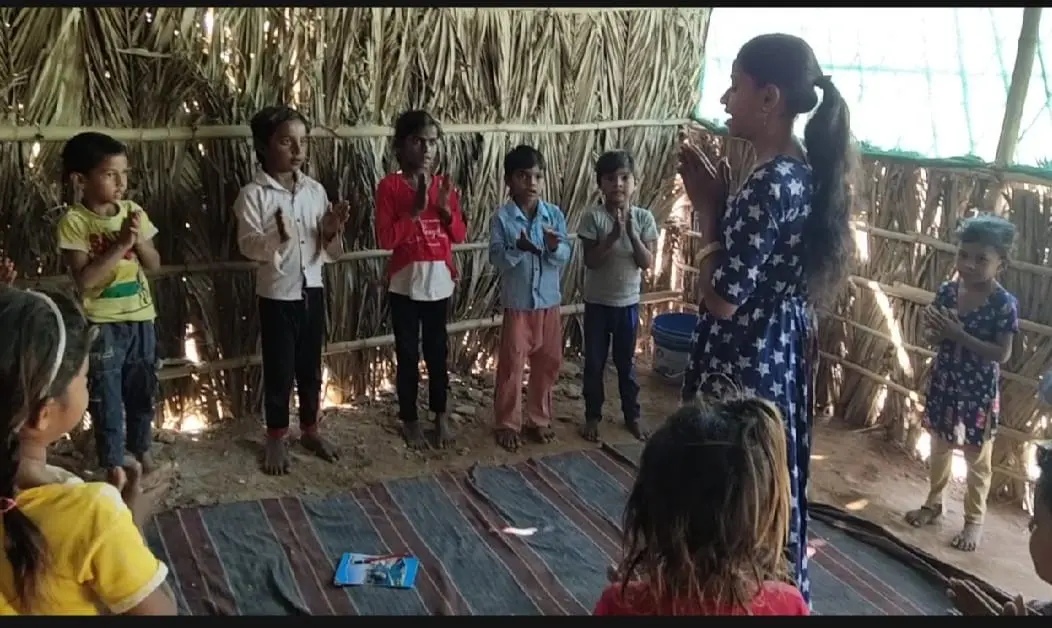
A clapping game during class inside the settlement's thatched-roof learning centre.
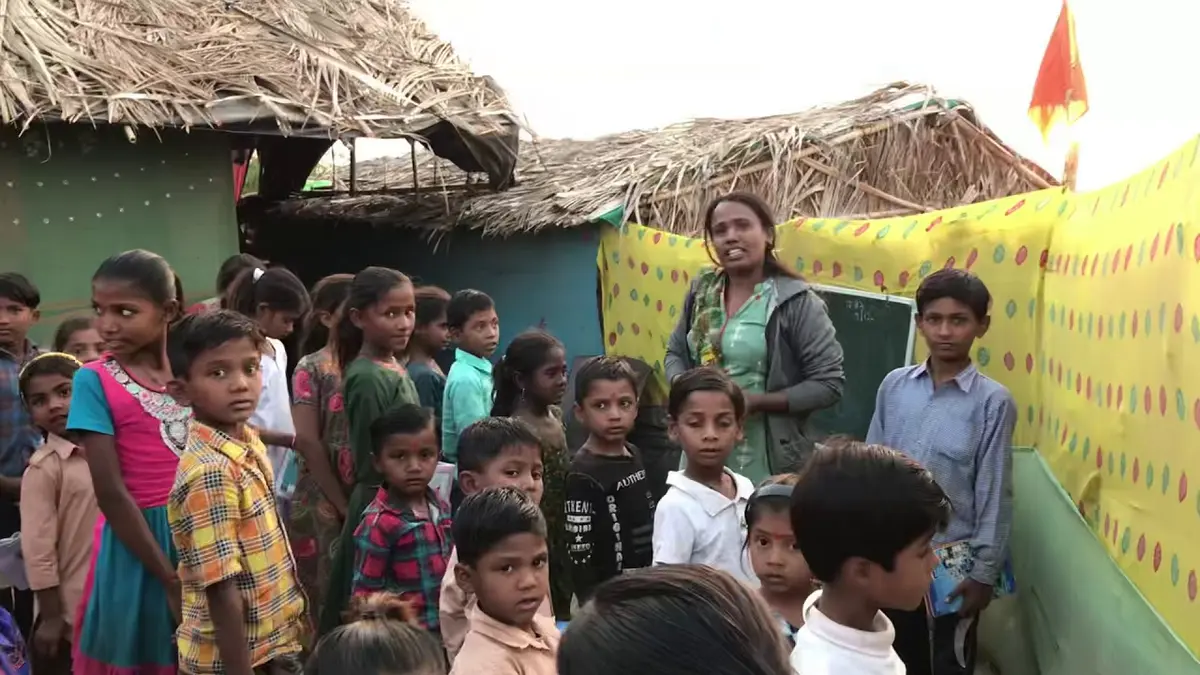
An outdoor lesson at the settlement, children gathered around their teacher.
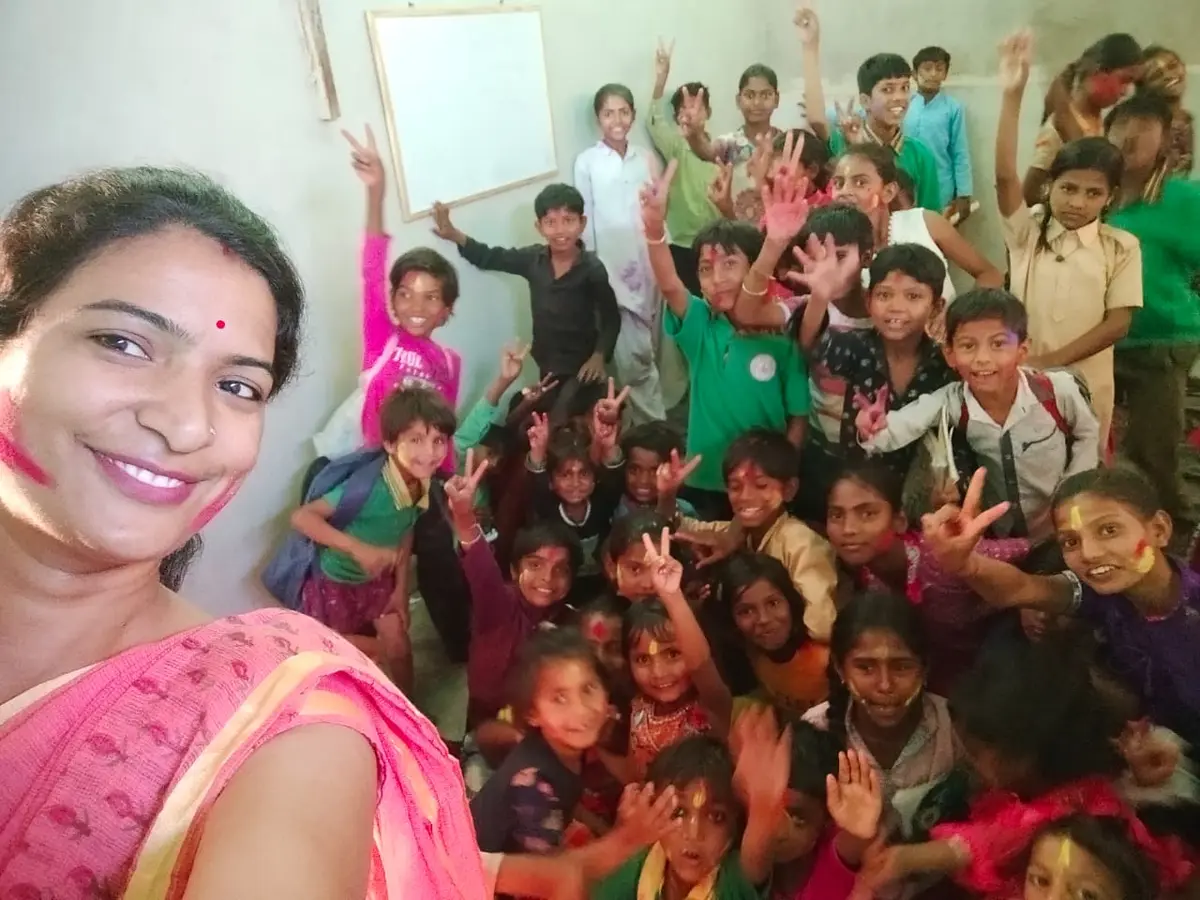
Holi celebration at the centre — colours, laughter, and a classroom full of victory signs.
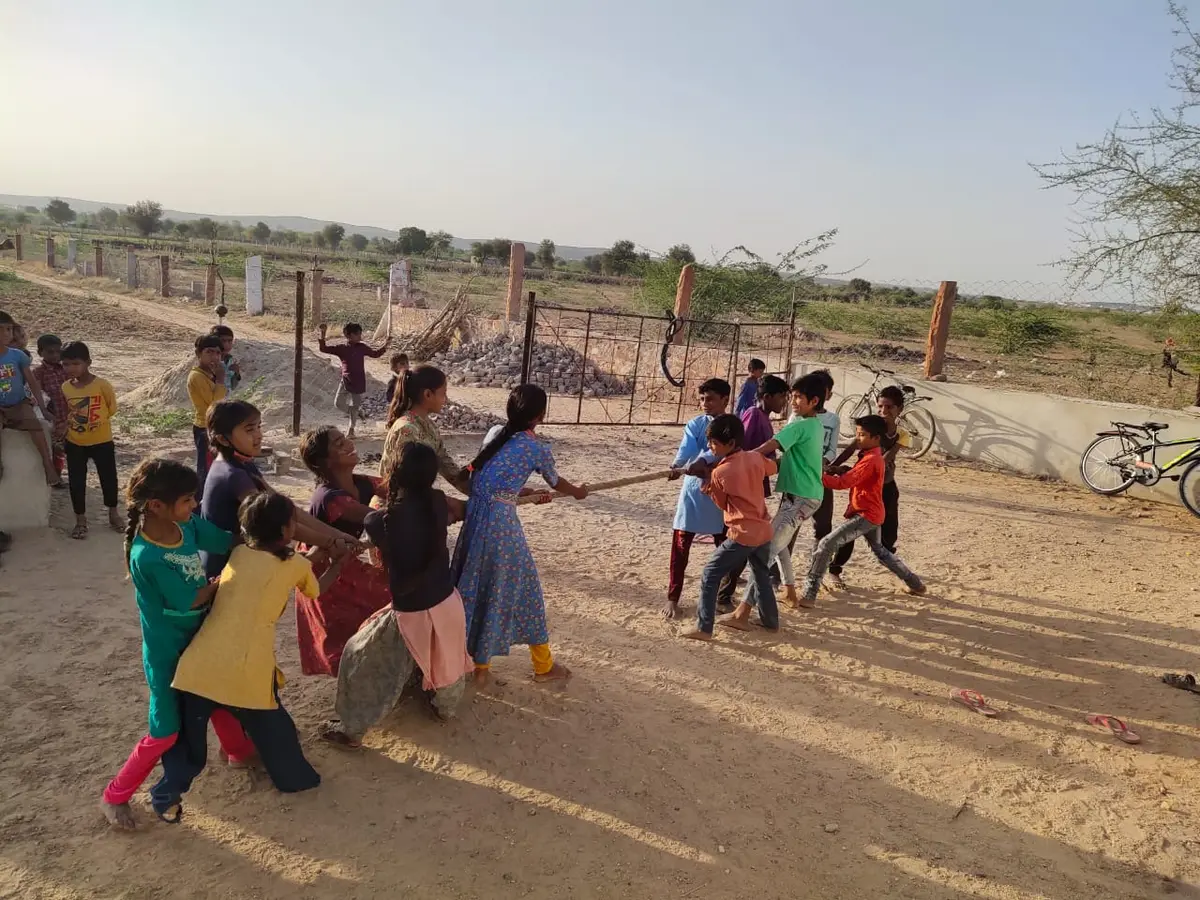
A round of tug-of-war during outdoor play time.
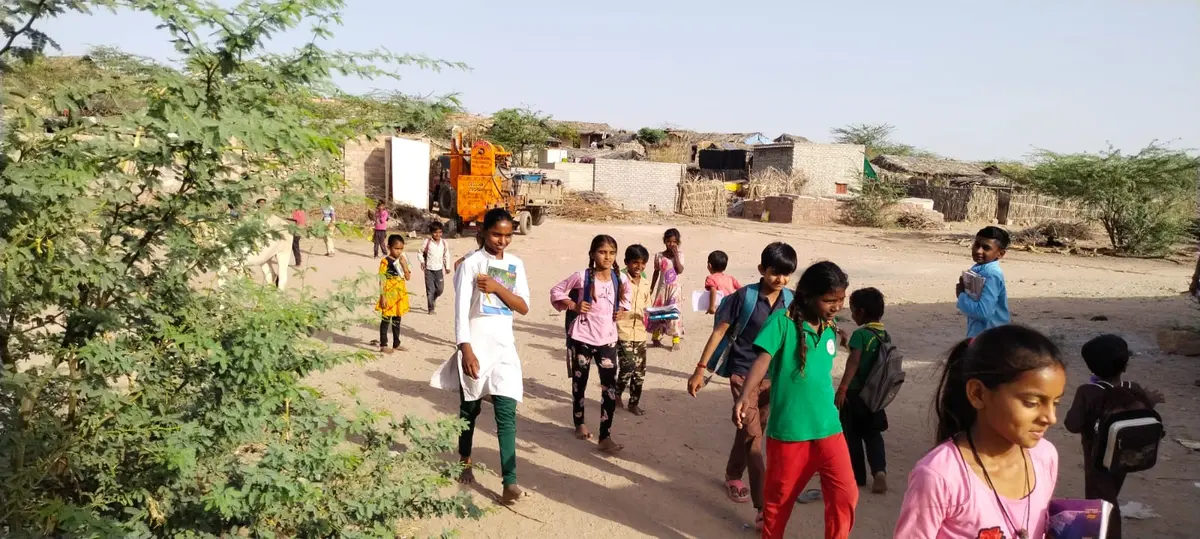
Children walking to the centre together, school bags on their backs.
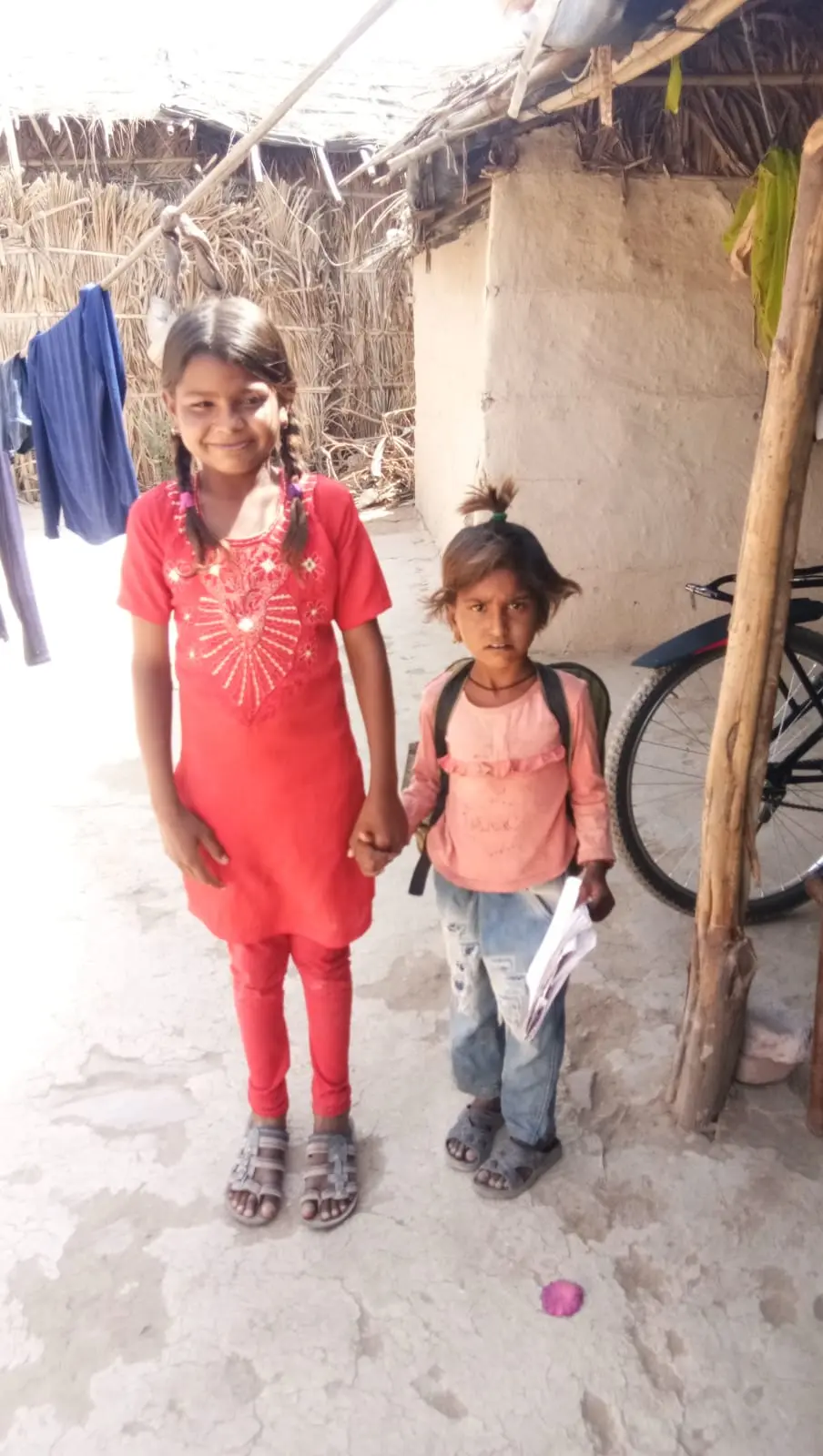
An older sister walks her younger sibling to class.
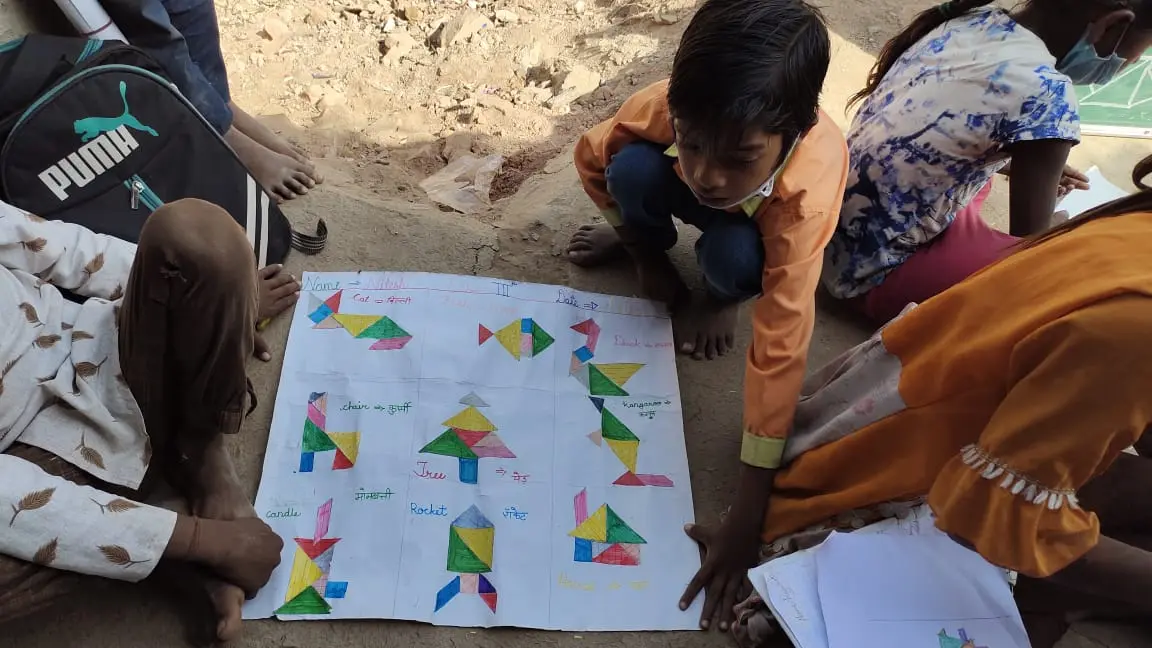
A geometry worksheet — students building shapes like a tree, a kangaroo, and a rocket from tangram pieces.
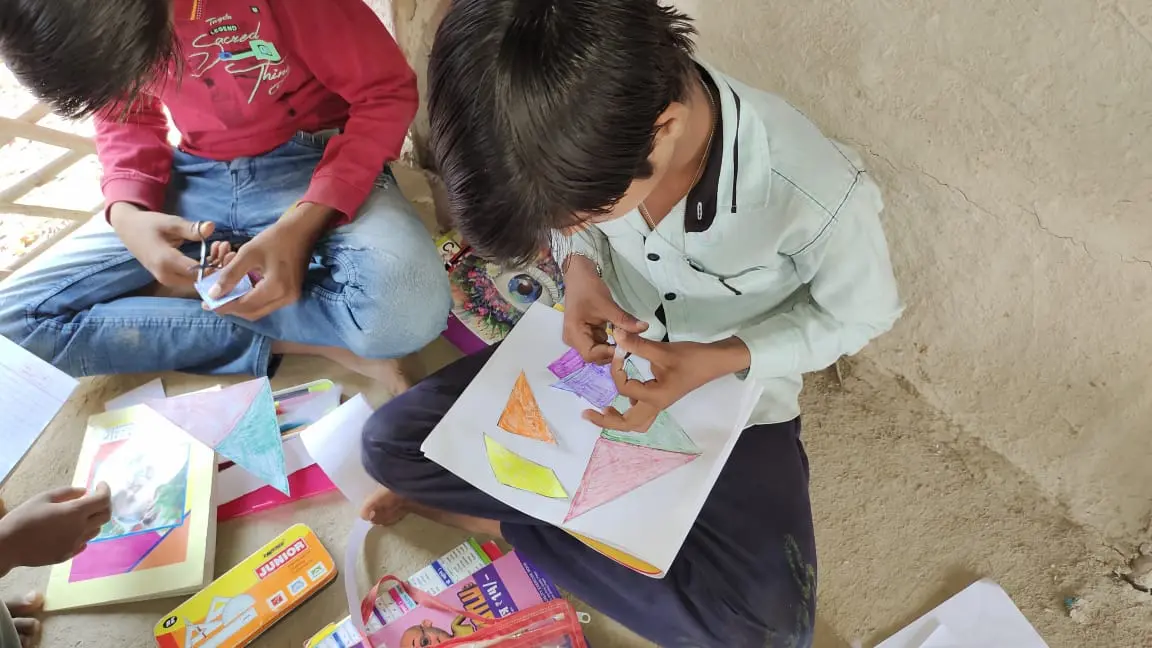
Art & craft hour — cutting and arranging coloured paper shapes.
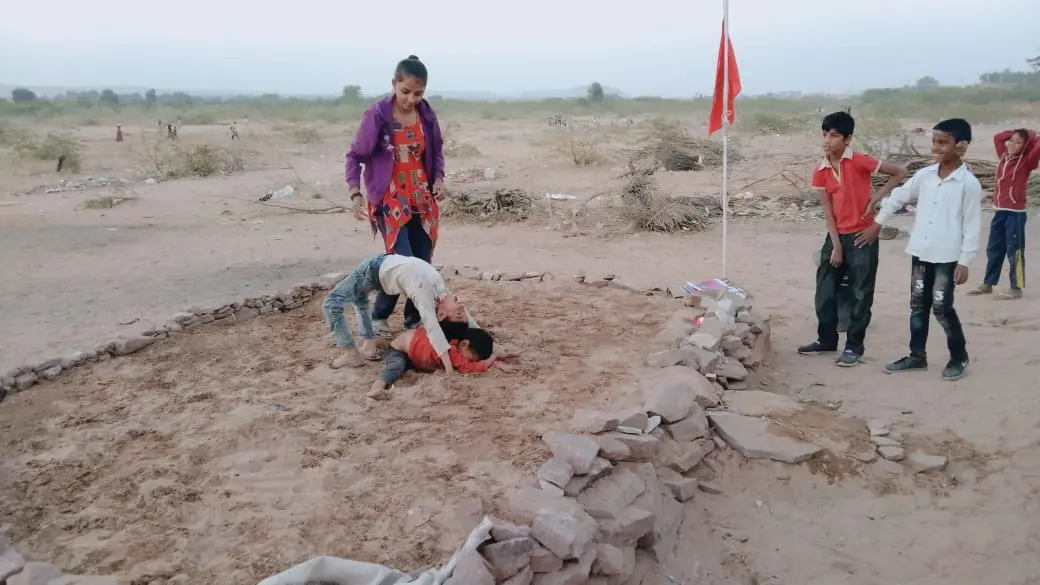
Outdoor stretching before the day's sports hour.
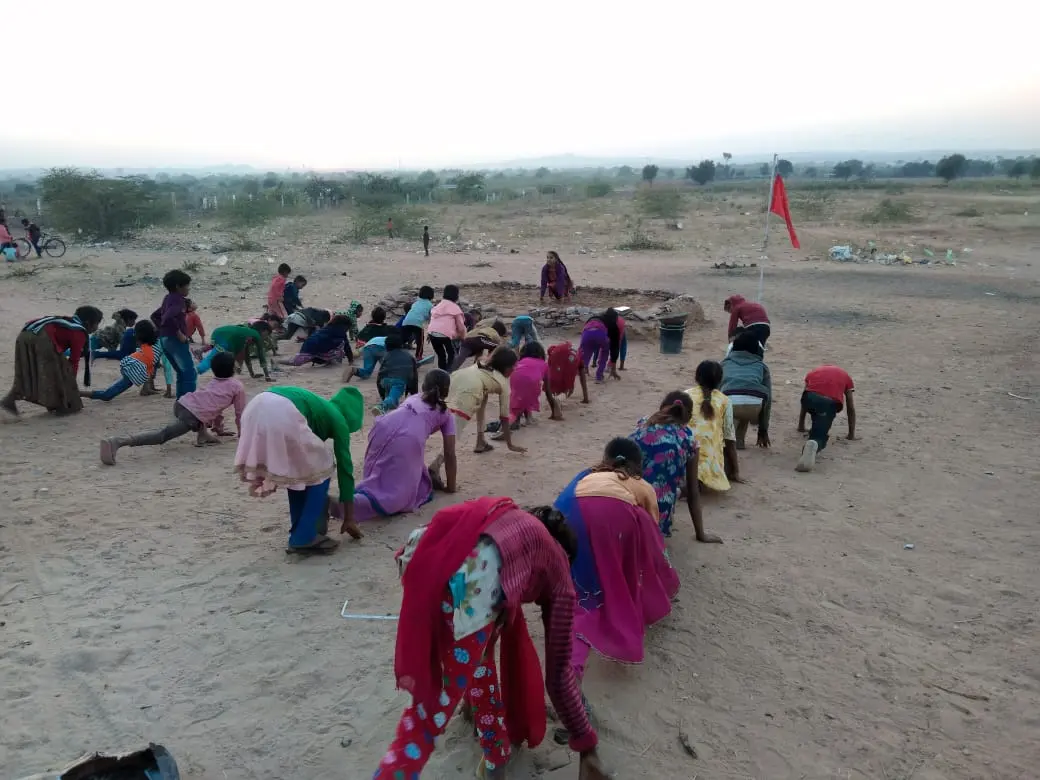
A line exercise during the centre's daily sports and yoga hour.
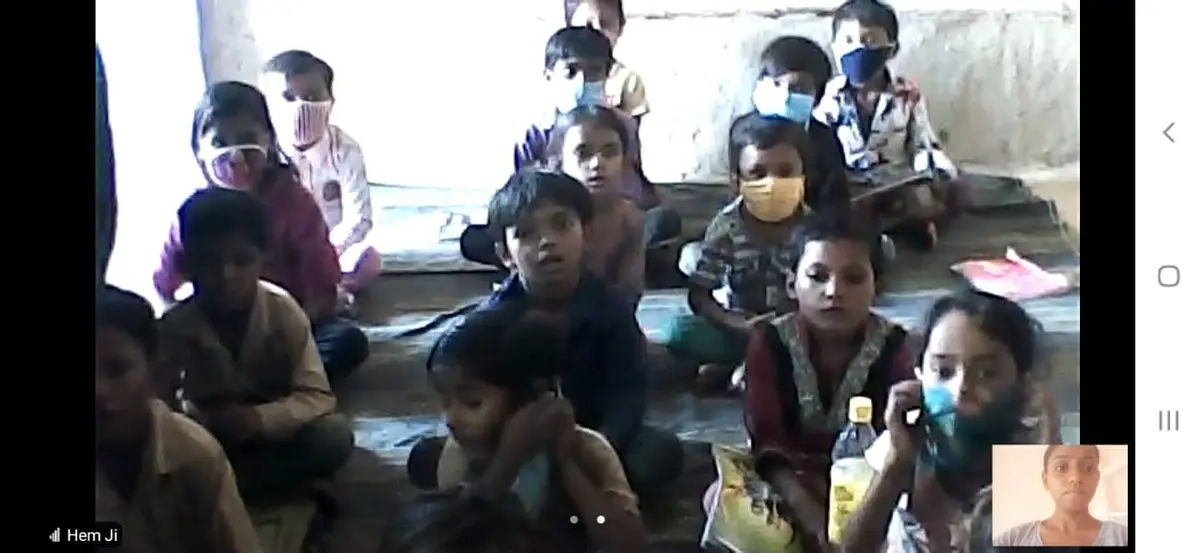
A virtual training session, conducted with masks on during the pandemic.