
- Home
- About Us
- Our Work
- Livelihoods
- Knowledge Hub
- Gallery
- Internship Program
- Contact
The communities who did the least to cause climate change suffer its worst consequences. That is not just an injustice — it is a human rights crisis.
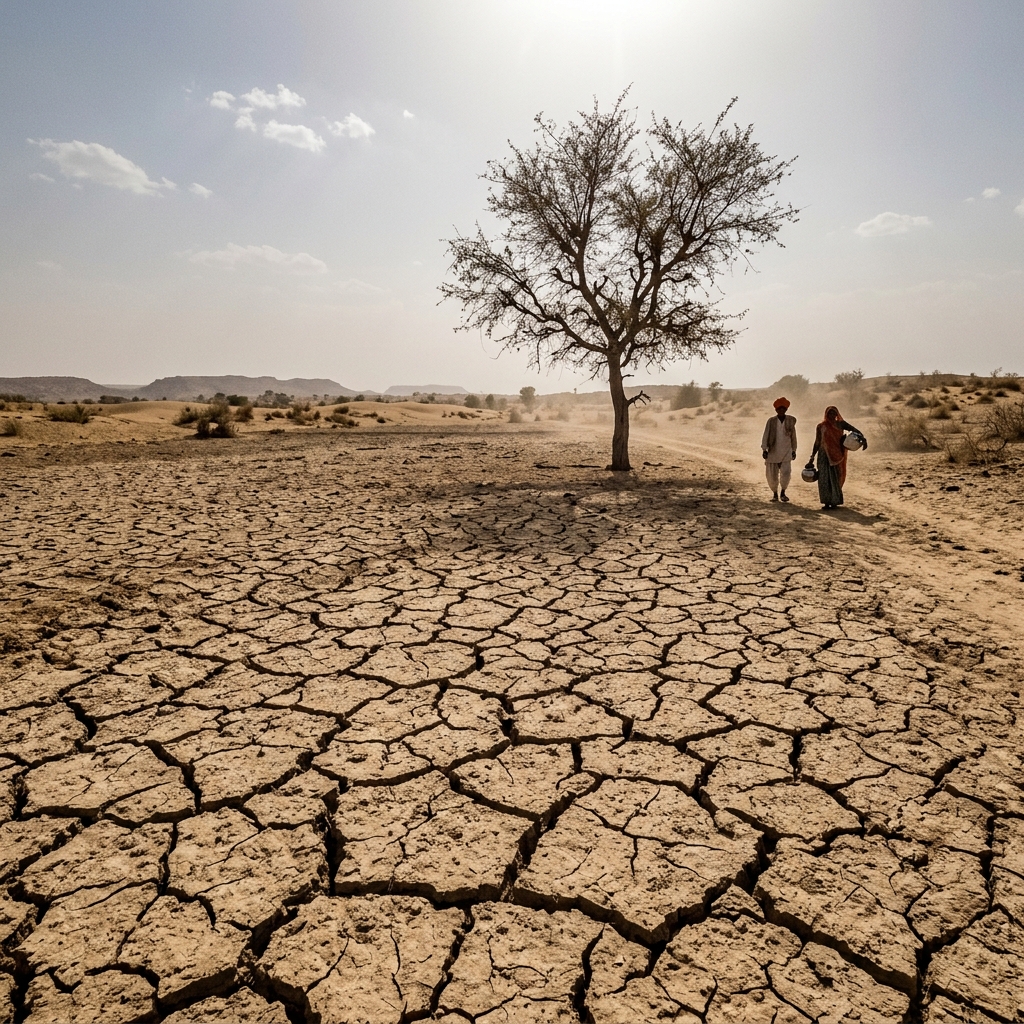
In Rajasthan, the frontlines of the climate crisis are not in research laboratories or government buildings. They are in the brick kilns, the dry fields, and the villages where UJAS works every day. The workers who toil in 45°C heat, the women who walk 5 kilometres for water, the farmers whose harvests have failed three years in a row — these are the climate frontline communities.
And yet, they have virtually no say in the policies that govern climate response. Their concerns are not reflected in national adaptation plans. Their vulnerabilities are not captured in climate finance frameworks. SLS UJAS is working to change that.
"When the rains fail, the debt grows. When the debt grows, another family loses everything. Climate change is feeding the displacement and poverty crisis."
— UJAS Field Coordinator, Barmer
Research by UJAS shows a direct link between climate shocks — drought, floods, heat waves — and spikes in displacement and poverty. When crops fail, families take advances from landlords and employers, creating the debt trap that leads to bondage. Climate justice is therefore inseparable from labour justice.
Brick kiln workers labour in temperatures exceeding 50°C near kilns. There are no legal protections for breaks or heat compensation. Women and children are most at risk of heat stroke.
Falling groundwater tables force women to walk further for water every year. In some villages, water is now bought from private tankers — an additional burden on already impoverished households.
Repeated drought-related crop failures push rural families — especially refugees without a safety net — to take advances from landlords or contractors, creating cycles of dependency. Climate shocks are a leading trigger of economic distress seen by UJAS.
The Thar Desert is expanding. Villages that had productive land 20 years ago now face sand encroachment. Entire communities are being displaced, losing their homes and livelihoods.
The overwhelming number of marginalized communities targeted by UJAS stay in the western desert parts of Rajasthan. Their livelihoods are mainly dependent on agro-forestry activities and livestock rearing, besides handicrafts as an alternative means of income.
Drastic adverse changes in climate leading to droughts, flooding and temperature hikes have badly affected water security and food security in desert villages of western Rajasthan.
For Pakistani refugees who migrated in 1971, these environmental challenges are worsened by systemic land allotment issues. Many refugees were promised agricultural land as part of rehabilitation packages, but were instead allotted uncultivable sand dunes or land that later fell inside the boundaries of the Desert National Park. Stripped of the ability to farm, these refugees are forced to live in desperate poverty and earn their livelihoods through manual labour in increasingly hostile climates.
Modern development practices have introduced sophisticated groundwater extracting motor-pumps, leading to rapid depletion of groundwater. This is further aggravated when the traditional practice of groundwater recharge through rains vanishes. Besides, the traditional practice of rainwater harvesting has also been declining rapidly.
The practice of collecting, preserving and using agro-forestry organic food products, as well as livestock rearing, have reduced significantly, leaving inadequate food stuffs for locals. This poses a serious threat to both water and food security.
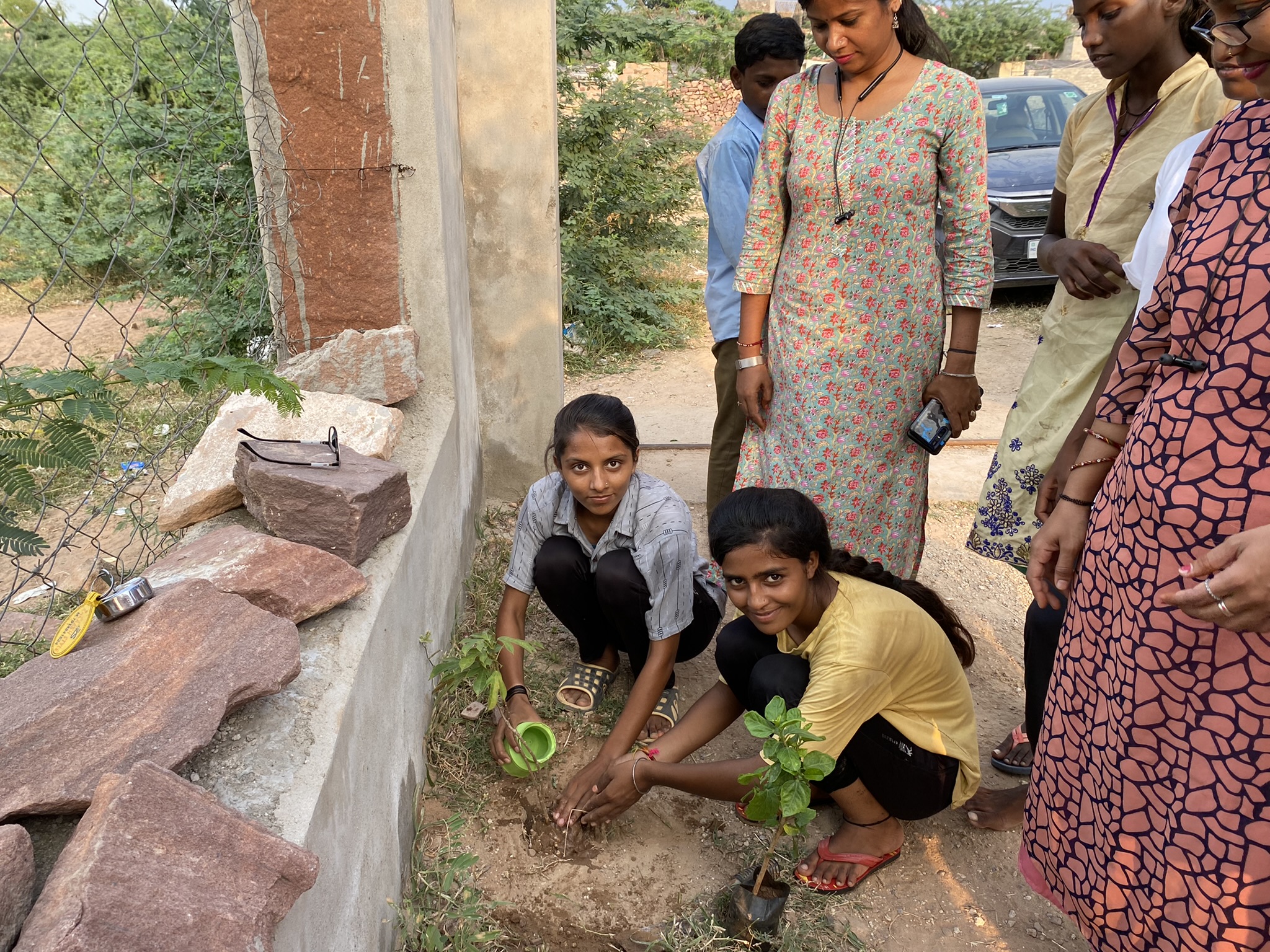
UJAS endeavours to help targeted communities to educate, advocate and opt for suitable adaptation measures that deal with climate variability. We strive to build upon indigenous but improved habits, practices, technologies and infrastructures for protecting threatened sources, species and practices of harvesting rainwater and promoting indigenous organic agro-forestry and livestock-derived foods.
Conducting research on traditional rainwater harvesting vs modern motor-pumps. Finding ways to strengthen and scale improved groundwater recharge practices.
Researching water, sanitation, and health/hygiene status. Executing WASH interventions in communities and schools to ensure access to improved water sources.
Conducting research on indigenous endangered species of livestock, understanding their worth in local food security, and finding ways for their protection.
Researching prevalent agro-forestry foods contributing to local food security, and finding ways for the niche marketing of organic food products.
Creating technological and infrastructural models adhered with grassroots mechanisms to empower communities to drive advocacy campaigns for policy changes.
Promoting solar lighting as an effective alternative energy source to save non-friendly energy sources and prevent deforestation.
Help us fight for the communities bearing the heaviest burden of the climate crisis.