Home / Knowledge Hub / Featured Stories

Featured Stories

Voices from the Field

These are not statistics. They are people — with names, dreams, and stories of extraordinary resilience. Read the accounts of those whose lives changed through collective action.

"Behind every case number is a human story. We share these stories with permission and gratitude — to honour the survivors, and to remind ourselves and the world why this work cannot stop."

— SLS UJAS Field Documentation Team
Sunita's Journey
2023

"They said I was born to carry bricks. I knew I was born to create something beautiful."

Sunita's Journey

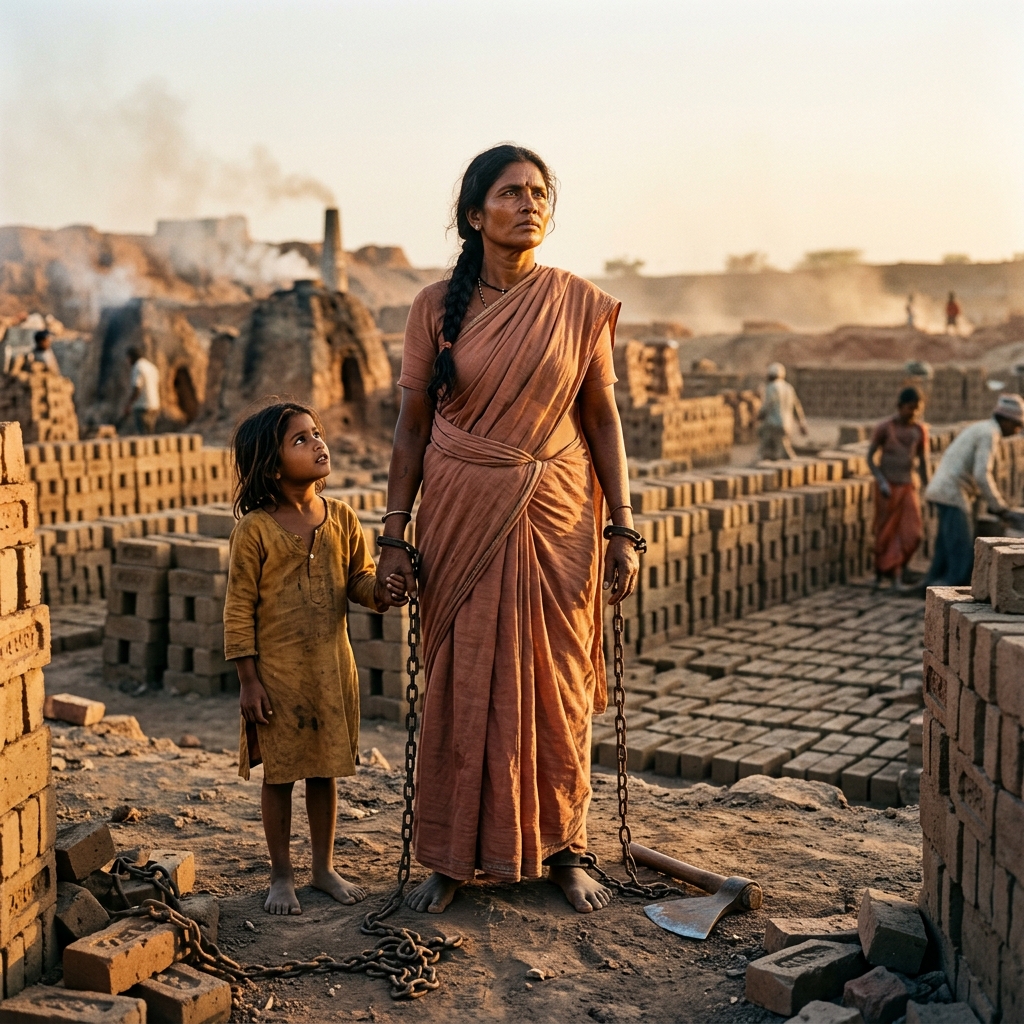
Sunita Devi was nineteen years old when UJAS field workers first encountered her at a brick kiln on the outskirts of Jodhpur. She had been brought there as a child with her parents, who had accepted a small "advance" from the kiln owner — a sum that, under the logic of debt bondage, could never quite be repaid. Her parents worked. Sunita worked. Her younger siblings worked. Year after year, the debt remained, a fiction the kiln owner deployed with cold precision.

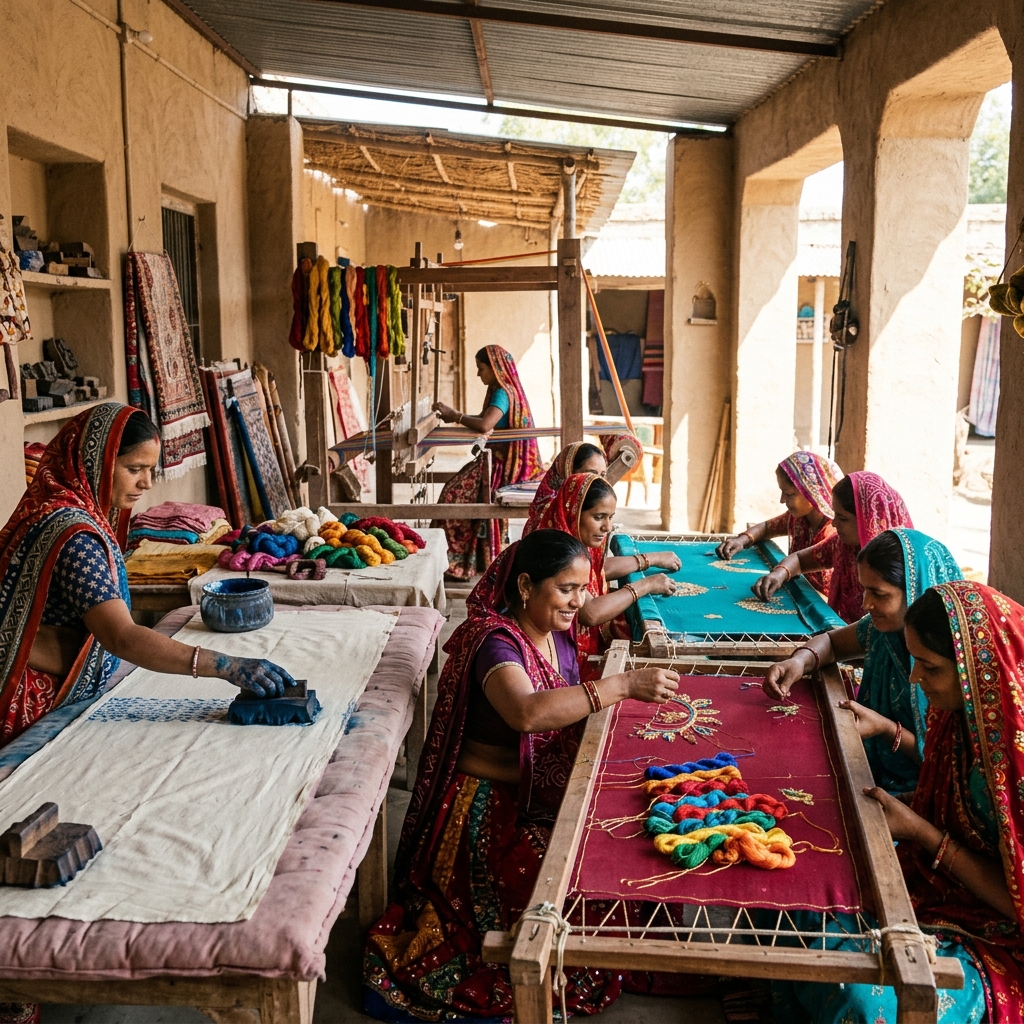
The liberation process was not instant. UJAS worked for months building trust with Sunita and other families, documenting the labour violations, and coordinating with the District Labour Commissioner and local police. When the families were finally freed, Sunita was given access to the UJAS Women's Crafts Centre — a space she described, in her own words, as "the first place I ever felt like a person, not a tool." She learned bandhani tie-dye, embroidery, and block printing under master artisans. Within eighteen months, her work was being sold at exhibitions in Jaipur and online.

Today, Sunita runs her own small unit under the UJAS cooperative umbrella, employing three other women from her former kiln community. She is saving to educate her daughter in a residential school. She sits on the UJAS women's advisory committee. When she speaks at community meetings, younger women lean in to listen. "They said I was born to carry bricks," she tells them. "I knew I was born to create something beautiful — I just needed someone to give me the tools."
Ramesh & His Family
2024

"My son told me last week he wants to be a doctor. I wept for an hour. Good tears — the kind I had forgotten existed."

Ramesh & His Family

Ramesh Meghwal was a farmer from a small village in Nagaur district who took a ₹15,000 loan from a landlord in 2015 to pay for his wife's medical treatment. What followed was eight years of what can only be described as agricultural servitude — Ramesh, his wife Savitri, and their three children working the landlord's fields in exchange for "meals and lodging," while the original debt ballooned through fabricated interest calculations and arbitrary fines. The children never attended school. Ramesh was forbidden from seeking outside employment.

A UJAS community mobiliser first heard about Ramesh's situation through a village women's self-help group. After weeks of careful investigation and legal research, UJAS filed a formal complaint with district authorities and the National Human Rights Commission. Through persistent legal advocacy, the family was granted citizenship documentation, their children were enrolled in a local government school, and they received access to government welfare programmes. UJAS staff also helped the family connect with the Dhaat Healthcare Initiative for medical support.

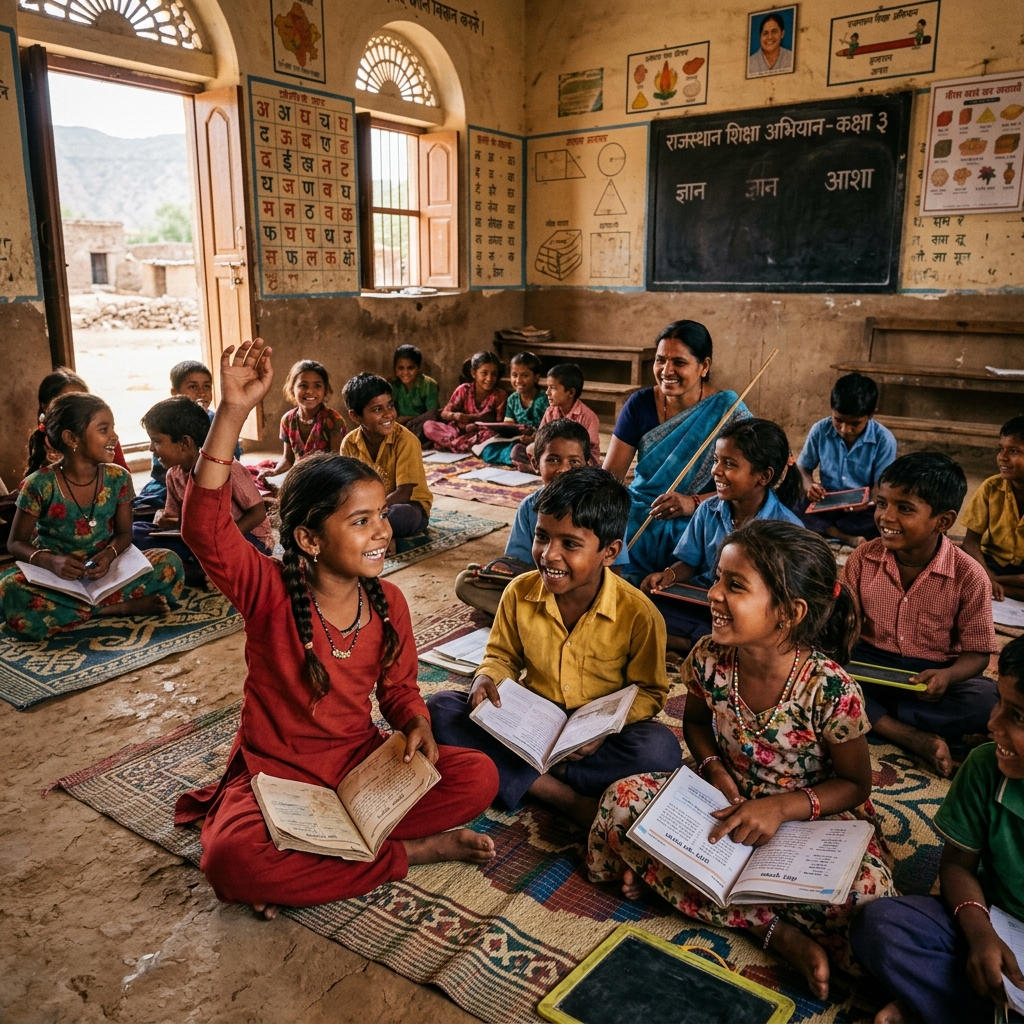
It has now been two years since Ramesh's family was freed. His eldest son Rohit, fourteen, who had never sat in a classroom before 2022, passed his Class 6 exams with distinction. His daughter Mira is learning to read in Hindi and Maths. Savitri has joined a UJAS self-help group and is taking small loans to start vegetable vending. Ramesh works as a daily wage labourer — this time with the right to leave at day's end, to go home, to dream. "My son told me last week he wants to be a doctor," Ramesh says quietly. "I wept for an hour. Good tears — the kind I had forgotten existed."

Kavita's Campaign
2023

"No one gave us the land. We stood, we marched, we demanded — and they had no choice but to listen."

Kavita's Campaign

Kavita Bishnoi did not set out to become a leader. She was a widow in her mid-thirties, farming a small plot of land in Barmer that had technically been in her late husband's name — land that her in-laws had begun to claim after his death, using informal village pressure and an old social norm that said women did not inherit. When UJAS women's rights workers arrived in her village for a legal literacy camp, Kavita was among the women who stayed after the session to ask more questions. She stayed later than anyone.

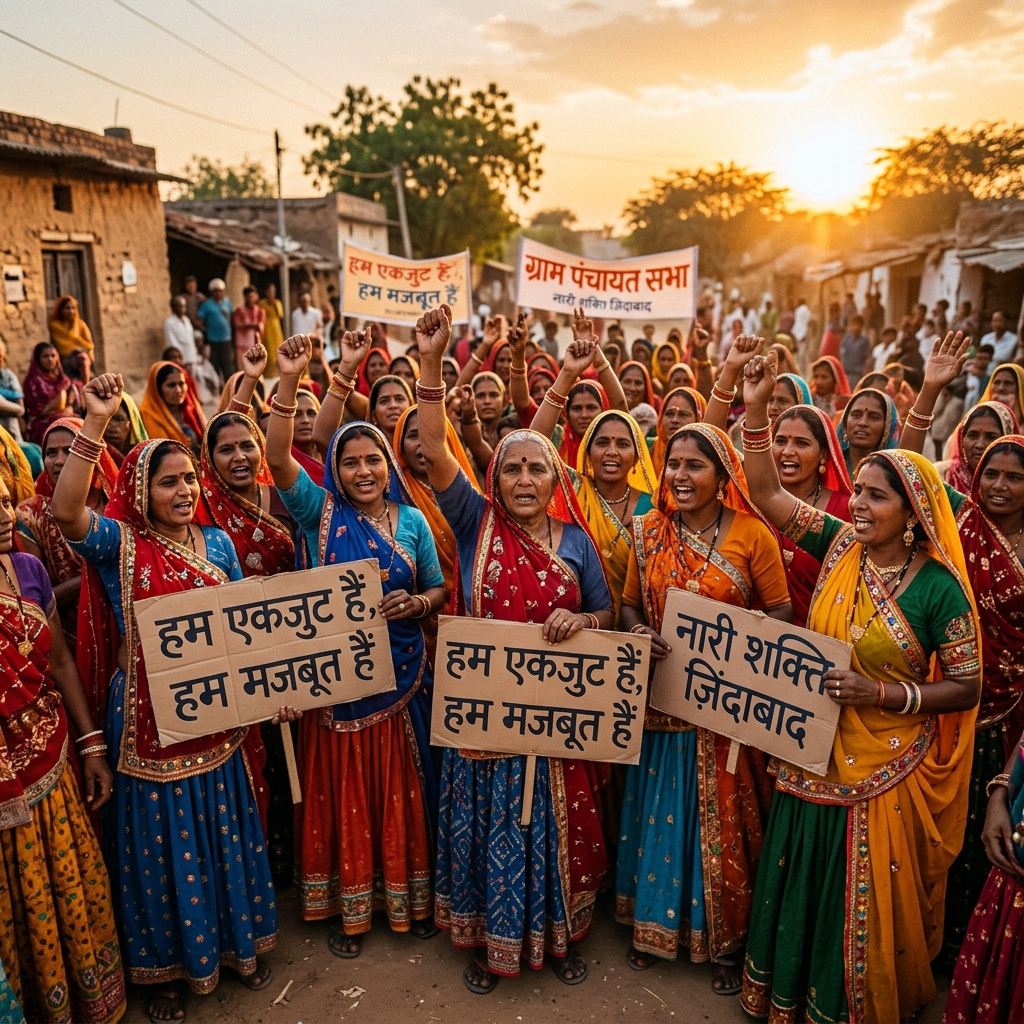
Over the next six months, Kavita helped UJAS identify 33 other women in her panchayat area who were in similar situations — widows, deserted wives, or women from landless households who had legitimate entitlements under existing law but had never been able to assert them. With UJAS's legal support, she co-organised a women's march that covered four villages and ended at the tehsil office with a collective demand for land records to be transferred into women's names. The local revenue officials, initially dismissive, were met with a crowd of over 400 women who refused to disperse until they received written acknowledgement of their petition.

The campaign succeeded. By early 2023, 34 women — including Kavita — had received land titles in their own names. Several have since used these titles as collateral to access bank loans. Kavita now leads a women's rights monitoring committee in her block, training others to navigate land records and legal processes. She has travelled to Jaipur twice to testify before state-level advocacy forums. "No one gave us the land," she says, standing straight. "We stood, we marched, we demanded — and they had no choice but to listen."

The Jodhpur Liberation
2024

"For the first time in my life, I have proof that I exist."

The Jodhpur Liberation

The brick kilns on the Jodhpur–Nagaur highway had been an open secret for years. Operators recruited migrant workers — mostly Dalit and Adivasi families from Barmer, Jalore, and Sirohi districts — with promises of fair wages and advances for transit costs. On arrival, families found themselves locked into a cycle of debt they could not escape: wages were withheld against "advance repayment," accommodation was deducted from earnings, and those who tried to leave faced threats and physical intimidation. UJAS had been receiving fragmented reports about the kilns for over a year.

The School Education Support Project at UJAS has seen significant progress. Enrolment grew from 114 to 140 students, with 19% of new admissions from low-income and migrant families. Attendance levels remain above 90%, reflecting improved community trust in education. For children like these — from families without citizenship papers — school is not a given. UJAS field workers identify out-of-school children, navigate the enrolment process, and support families so children can stay in school even when economic pressure is intense.

The inspection and liberation process unfolded over three intensive days. UJAS staff, district officials, Child Welfare Committee members, and police teams moved through five kiln sites, documenting each family, verifying debts, and overseeing the cancellation of bonded agreements. In total, 47 families — 186 individuals, including 74 children — were freed. All received immediate relief kits and were registered for the national rehabilitation scheme. Within a month, 61 of the children had been enrolled in formal or bridge schools. A special fast-track court was established to prosecute the kiln owners, marking a significant step toward accountability. "When the last family walked through that gate," recalls one UJAS field worker, "we stood in silence for a moment. Then someone started to cry, and we all did."

Persecution & The Search for Safety
2013

"If the border were hypothetically opened for a day, the entire Hindu population of Pakistan would move to India."

Persecution & The Search for Safety

For the Hindu minority living in Pakistan, religious persecution is a daily reality. The testimonies shared at the public hearing painted a harrowing picture of a community systematically stripped of its fundamental rights. Mr. Chetan Ram shared the heartbreaking story of a nine-month-old infant girl from his community who passed away. In Hinduism, cremation is the mandated last rite, yet Pakistani authorities and local leaders forcibly buried the child against her family's will, denying them their most sacred religious practices.

The oppression extends into every facet of life. Sindhi blogger and activist Mr. Rakesh Lakhani explained how hostility toward Hindus has disseminated to all corners of Pakistan. Establishing Hindi newspapers is prohibited, landlords routinely interrupt religious sermons (Path), and laborers are frequently denied their proper wages. Perhaps most chilling are the widespread accounts of the abduction of young Hindu girls, such as 17-year-old Rinkle Kumari, who are forcefully converted to Islam while the legal system turns a blind eye to their families' pleas.

Faced with such pervasive lawlessness and terror, migration becomes the only viable means of escaping tyranny. As Mr. Lakhani powerfully stated during his testimony, "If the border were hypothetically opened for a day, the entire Hindu population of Pakistan would move to India." These individuals arrive seeking nothing more than the basic human right to practice their faith in peace.

The Visa Lottery & Divided Families
2013

"This is not right. The government should consider these things before granting visas."

The Visa Lottery & Divided Families

Migrating to India is only the first hurdle; navigating the Byzantine visa system is often a nightmare that tears families apart. When Hindus in Pakistan apply for Indian visas to reunite with their relatives, they are frequently assigned to entirely different states. A refugee applying to live with family in Rajasthan might inexplicably be granted a visa for Haryana or Haridwar, and once there, they are legally prohibited from leaving their assigned area to visit other states.

Mr. Kabira Ram shared the heavy toll this has taken on his family. After living in Haryana for five years as mandated by his visa, his citizenship application was continuously delayed. When his daughter married a man living in Jodhpur, Rajasthan, Mr. Kabira Ram was legally barred from entering the state to meet his new in-laws. Such arbitrary restrictions strain the already fragile lives of refugees trying to rebuild.

Others, like Mr. Jeevan Ram, have resorted to taking immense risks. Despite being issued a visa for Haridwar, he secretly moved to a farm in the Al Kausar settlement in Jodhpur simply to be with his family who resides there. These stories underscore a critical need for a coherent, compassionate national refugee policy that prioritizes family reunification rather than arbitrary geographical assignment.

Education Denied
2013

"She wants to make a future for herself, how she wants to make something of her life. But she cannot do so, because she cannot even attend school."

Education Denied

For young Pakistani refugees in India, the dream of an education is often crushed under the weight of missing documentation. Without official citizenship or recognized caste certificates, schools and universities frequently deny admission to refugee children, leaving an entire generation stranded in academic limbo.

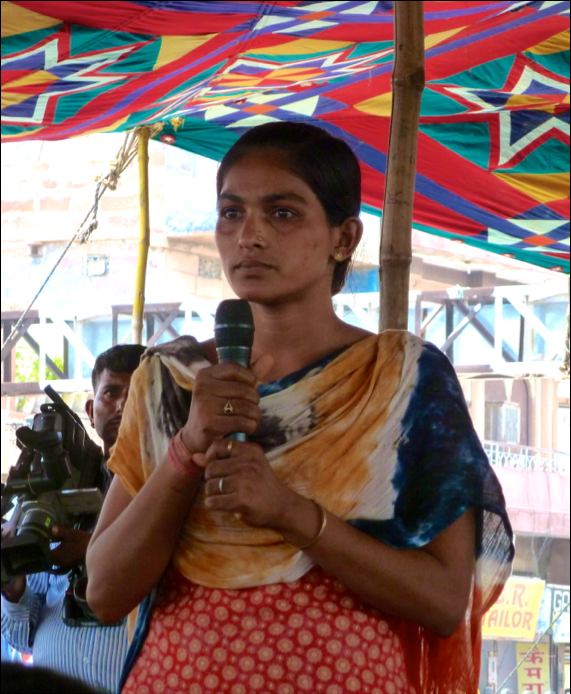
Ms. Devi Rani, a 23-year-old woman living in Jodhpur, had been pursuing a B.Tech degree at the Manav Institute in Hisar. Despite having lived in India since she was an infant, she was ultimately forced to abandon her studies because she lacked citizenship documentation. Her younger siblings have similarly been barred from attending school. She spoke passionately at the hearing about her simple desire to build a future for herself—a future that is currently being denied by bureaucratic red tape.

Similarly, Mr. Kishor was barred from gaining college admission for the exact same reasons. Even when alternative educational avenues are found, the lack of a caste certificate means these refugee students are subjected to exorbitant fees that their families, already struggling with poverty and displacement, cannot possibly afford. Their testimonies serve as a stark reminder that true liberation must include the right to learn.

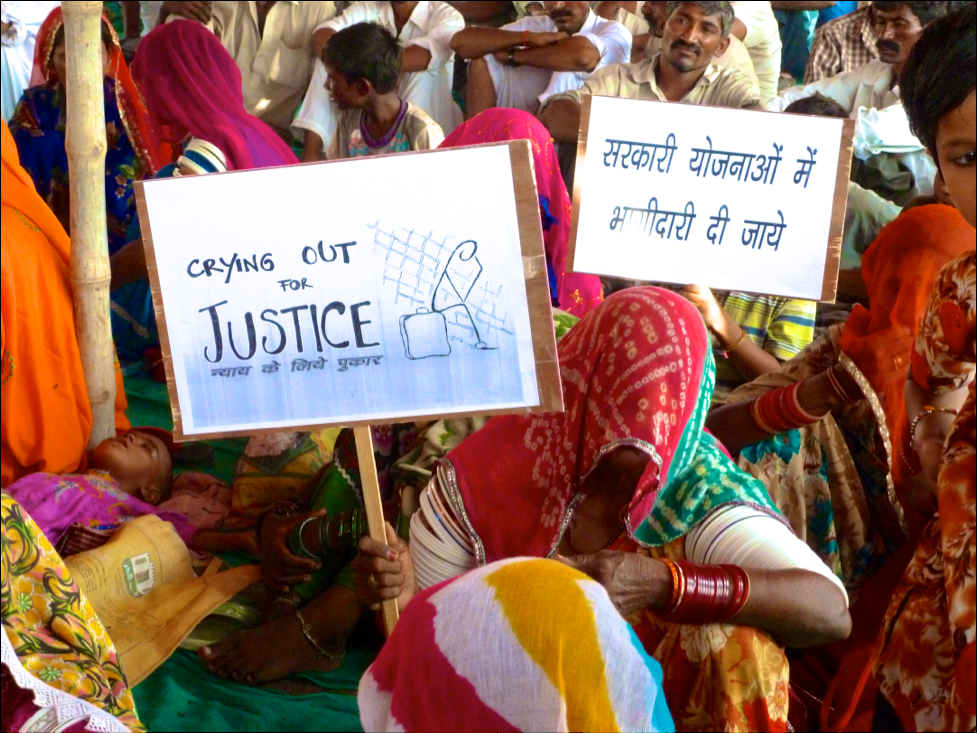
A United Cry for Justice
2013

"Their cries for justice would only be heard if they raised their voice in unison."

A United Cry for Justice

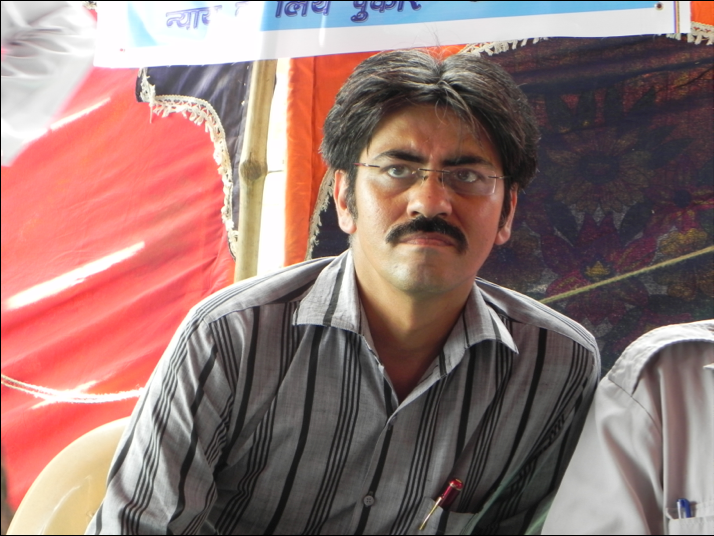
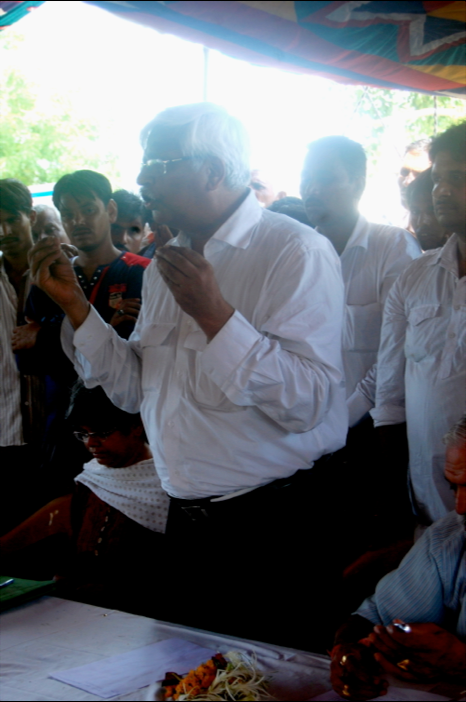
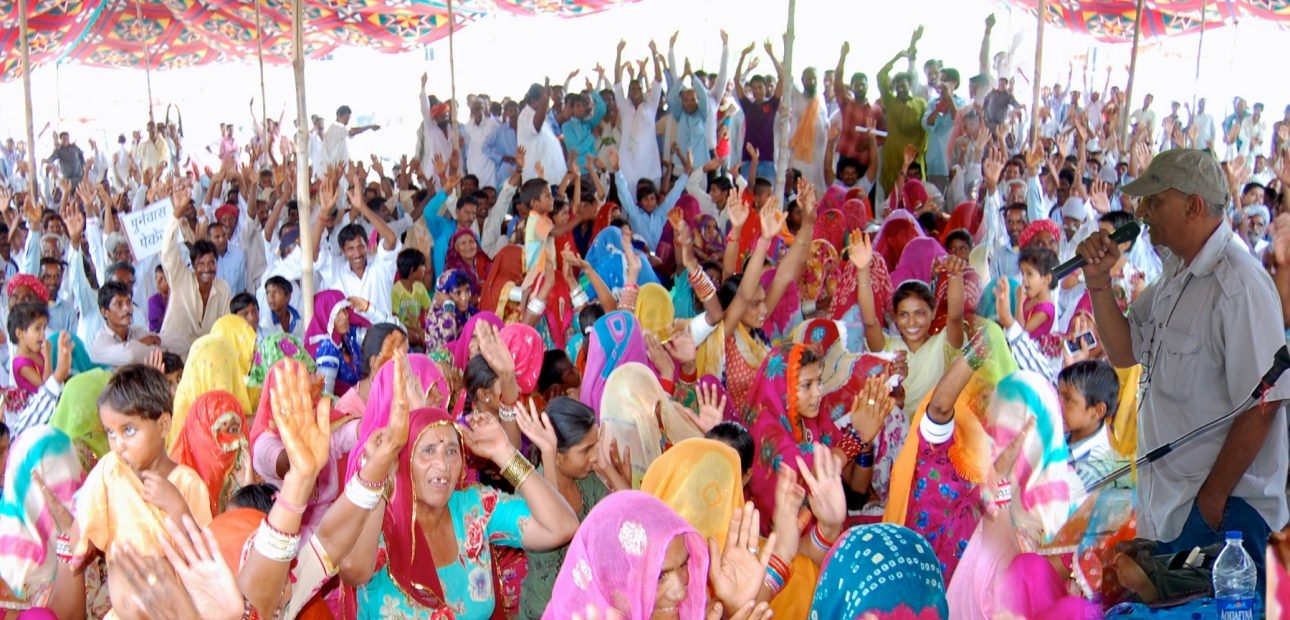
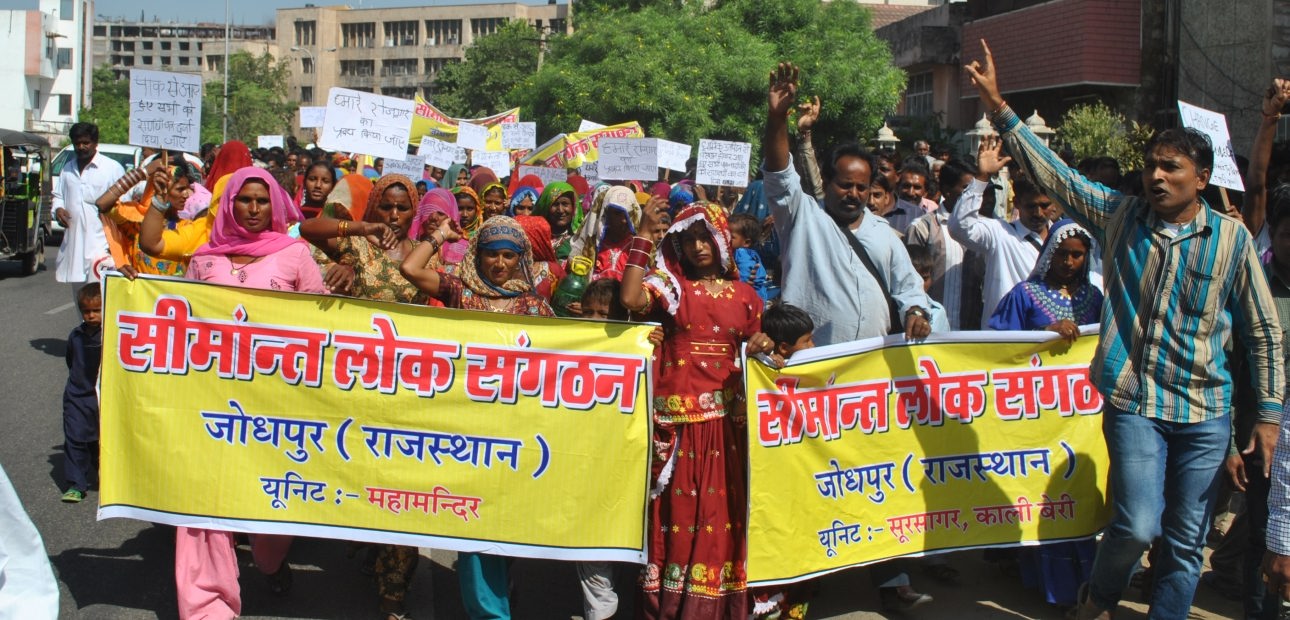
The Seemant Lok Sangathan (SLS) public hearing was not merely a forum for grievances; it was a powerful display of community solidarity and a catalyst for systemic change. Schoolteacher Mr. Chetan Das took to the stage to encourage all Hindu-Pakistanis to forge a cohesive, united front, arguing passionately that their collective voice was their only weapon against apathy.

Dignitaries and legal experts from across Rajasthan stood in solidarity with the refugees. Mr. Mahesh Bora, a senior advocate in the Rajasthan High Court, asserted that forceful, united action would demonstrate the undeniable need for a comprehensive national refugee law. Activists like Ms. Kavita Srivastava and Ms. Lad Kumari Jain pledged their expertise to elevate the refugees' demands to the highest levels of government.

The hearing culminated in the drafting of a comprehensive memorandum outlining nine key demands—ranging from official refugee status to the simplification of the visa process. Signed by Mr. Hindu Singh Sodha and delivered by a large group of SLS volunteers, the document was sent directly to the Prime Minister of India and the Chief Minister of Rajasthan, marking a historic step in the ongoing fight for dignity and legal recognition.

Bhairon Singh, Uttam Singh & Swaroop Singh
2010

"The single ration card system left many families without enough land to sustain them."

Bhairon Singh, Uttam Singh & Swaroop Singh

Bhairon Singh, Uttam Singh and Swaroop Singh are brothers who migrated to India following the 1971 war between Pakistan and India. Although their joint family consisted of a large number of individual families, it was allotted only a single ration card. This was in the name of Bhau Singh, the brothers’ father.

The land allotment made on the basis of the ration card was therefore made only in the name of Bhau Singh. Consequently, the three brothers are left with very little land after the equal division of the land. The single ration card system followed for the purposes of rehabilitation is a serious problem as this has left many families without enough land to sustain them.

Fatima
2010

"Her job is to chop bajra once it is ripe and earns only a pittance."

Fatima

Fatima is a Meghwal (Dalit) woman and is around 80 years old. She is a widow, has two sons and lives with the younger one.

Her husband was allotted a piece of land under the 1978 rehabilitation package but after his death her elder son has taken claim of it. She is now left without any land. She works as an agricultural labourer in the field of a landowner. Her job is to chop bajra once it is ripe and earns only a pittance.

Bijal and Sita
2010

"The costs of litigation have to be borne by the hapless, poverty-stricken migrants, which they cannot afford."

Bijal and Sita

Bijal was allotted land under the 1978 rehabilitation package. After his death, his wife Sita, was not able to claim it as another party occupied it illegally.

A letter of complaint was presented but so far no action has been taken. Illegal occupation of the allotted land is a major problem which gets aggravated in the circumstances where the aggrieved is poor. The costs of litigation have to be borne by the hapless, poverty-stricken migrants, which, in many cases, they cannot afford.

Madhu Dan
2010

"This is a case of negligence on the part of the administration which did not verify whether the land was owned by the government or a private individual."

Madhu Dan

Madhu Dan had been allotted 75 bighas of land in 1979. After his death it was discovered by his family that the land already belonged to another person, Jiya Putri Malna.

A court case was filed but after 17 years, in 1995, the case was decided in favour of Malna. Madhu Dan’s son is now without any land. This is again a case of negligence on the part of the administration which did not verify whether the land to be allotted was owned by the government or a private individual.

Sada Ram
2010

"Sada Ram’s two brothers are landless and do not even have a plot of land for their homes."

Sada Ram

Sada Ram came to India in 1971. He settled in Pugal, along with his three brothers. The entire family was allotted 25 bighas of land in the name of Sada Ram, of which 10 bighas are un-irrigated.

Over the years the family has expanded and now consists of 27 people. The amount of land is too small to support such a large family. Hence, Sada Ram’s two brothers are landless and do not even have a plot of land for their homes.

Maha Singh Sodha
2010

"Because he did not have Indian citizenship then the allotment was cancelled."

Maha Singh Sodha

Maha Singh Sodha came to India in 1965 and settled in Gohad ka Tala, Barmer. In 1968 he received a ration card and was initially allotted 75 bighas of land.

But because he did not have Indian citizenship then the allotment was cancelled. In 2005 he received Indian citizenship but was officially awarded only 15 bighas of land.

Jujhardan Charan
2010

"Because of this he now is forced to work as an agricultural labourer."

Jujhardan Charan

Jujhardan Charan came to India and settled in Dhansar. He was allotted 75 bighas of land in 1978 in Shiv in Barmer. However, he did not actually receive the land.

In 1980 the Government informed him that the land he had been allotted was now part of the Desert National Park, which could not be cultivated. Because of this he now is forced to work as an agricultural labourer. There are numerous other cases like this.

Satram Suthar
2010

"His appeals continue unheard, forcing him to work as an agricultural labourer."

Satram Suthar

Satram Suthar, a Pakistani refugee, was allotted 75 bighas of land in 1978. However, this land was lost when the fence came up along the India-Pakistan border.

Satram asked for a plot of land in a different place but his appeals continue unheard, forcing him to work as an agricultural labourer. Numerous refugees who have settled along the border face the same problem.

Kesaram
2010

"Kesaram lost his mental balance. The family then decided to come to India."

Kesaram

Kesaram started a cloth business in Bhawalpur, Sindh. In 2000, along with his brother, he expanded his business and opened two showrooms of readymade garments.

An officer of the local electricity board strung together unsheathed electric cables over 7 shops, of which 2 belonged to Kesaram. 6 months later at 11 PM a fire broke out in which Kesaram's shops were burnt down. He lost Rs. 70,000/- cash and Rs. 10 lakh worth of goods. This news hospitalized him. No action was taken by authorities.

Kesaram lost his mental balance. The family then decided to come to India. They applied for visa in 2006 but were granted it in 2009. They reached Jodhpur on March 21st, 2009. His problem now is that he has been fined for late application for his annual visa extension. This lapse occurred due to financial instability and mental ill health. He wants to be pardoned for this lapse because he cannot afford to pay it.

Halumal & Pradeep
2010

"What is our real identity? Are we Hindustanis or Pakistanis?"

Halumal & Pradeep

They found a secure haven in India, when they arrived on April 4th, 2000, via the Atari-Wagaha Border. Halumal worked as a labourer on construction sites and worked day and night so that he could educate his son, Pradeep. Pradeep turned out to be a diligent student and complete his Senior Secondary Exam in the Science stream with 1st division marks.

But due to the sorry state of financial affairs, Pradeep gave up his studies and now accompanies his father to the construction site to work as a labourer.

Halumal has even paid the citizenship fee of Rs. 8000 on July, 27th 2005 but the government has yet to regard him fit enough to be awarded the citizenship. When they were in Pakistan, they were often referred to as 'Hindu'. But here, they're insulated by being called 'infiltrators', 'terrorists'. One question troubles them time and again "what is our real identity? Are we Hindustanis or Pakistanis?".

Every Story Begins With Someone Who Cared

These victories happen because of field workers who show up every day, legal teams who fight tirelessly, and supporters who believe in justice. You can be part of the next chapter.